


Factory history
Chassis factory "Autokaroserija" was founded on 1st of June 1952. The former company, established in 1947, entitled "Stražilovo" dealing in vehicle repairs, thus ceased to exist. Here, the foundation of a company for chassis manufacturing and repairing was laid, with modest resources and a small group of 15 workers. With further development of automobile industry the company changed its main business activity, i.e. instead of repairing and rebuilding automobile chassis it started manufacturing new ones. The new activity was officially registered in 1956.
In the same year first contacts with Automobile factory from Maribor have been established. This relationship was further developed through business and technical cooperation and in 1973 a procedure for integration with TAM (Automobile and Engine Factory, Maribor) was started.
In the meantime, on June 1st 1964 an army unit from Yugoslav Army was merged with Autokaroserija Novi Sad. This unit joined Autokaroserija with all of its resources and over 100 employees.
At the end of the same year, an entire tractor manufacturing department from TAM, Novi Sad transfers to Autokaroserija with its production means and 40 workers.
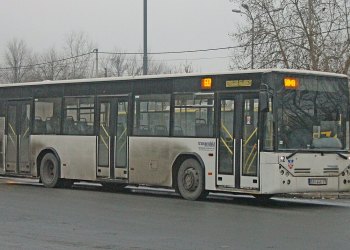
| City bus TAM AS 3500 M |
 |
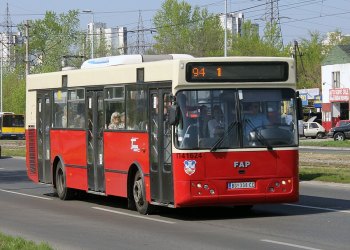
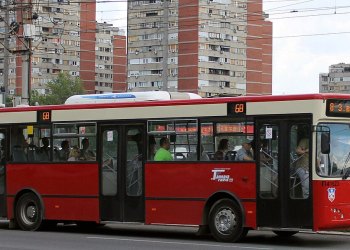
| City bus TAM 190 A 11 M | Suburban bus TAM 190 A 11 P |
 |
 |
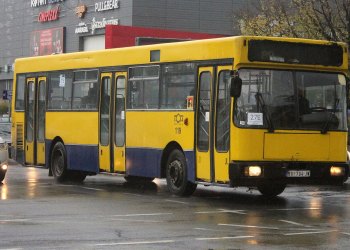
| A variation of TAM 190 A 11 for Danmark | |
 |
 |
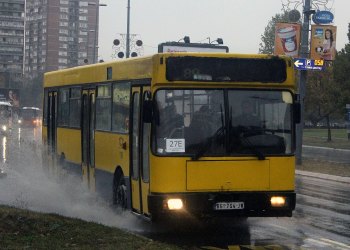
In 1974 Autokaroserija built its first buses on Volvo chassis for The Novi Sad Public Transport Company. Those were famous Volvos "with three windows" rear and front characteristic for the buses, designed up to standards of those days most advanced manufacturers in Europe.
| Volvo B58 built at "Autokaroserija" in 1974 |
 |
On December 9, 1974 Autokaroserija was incorporated into TAM Maribor (Tovarna automobilov in motorjev Maribor) thus gaining the status of OOUR. It operated under the name TAM Maribor, OOUR Autokaroserija Novi Sad. In 1977, on 14th February, OOUR Autokaroserija Novi Sad becomes a business organization ("Radna organizacija", R.O. for short) whose main activity is truck and special vehicles manufacture.
On February the 7th 1978 OOUR "Autokaroserija" together with seven other units of the same level accepted the Self-management Agreement about creation of SOUR ZIV TAM Maribor. It then became RO ZIV TAM Autokaroserija, Novi Sad an integral part of SOUR ZIV TAM Maribor. Its headquarters were at 5 Filipa Višnjića Street. "Zadrugar", an enterprise for rebuilding and repairing of vehicles and vehicle bodies, established back in 1945, just after the World War 2 merged with "Autokaroserija" on April the 1st 1981. On January the 20th 1984 SOUR ZIV TAM Maribor was renamed in "Joined Business Organization of Manufacturers of Motor Vehicles – TAM", Maribor. By the end of the year 1987, the firm moved to a new location – The Industrial Zone of Novi Sad at 19 Novosadskog partizanskog odreda Road, Novi Sad. A new production hall with built all the necessary objects.
From 1986 Autokaroserija moved to a new modern facility of 15.000 m2 where 700 workers produced 700 vehicles a year. The equipment installed was very advanced and it was not behind western factories in any way. This is when a new series of TAM’s urban and suburban buses, TAM 260A was introduced. 12m long with air cooled engines 260 hp strong the buses were the pride of Autokaroserija. Articulated city bus TAM 260A180 was designed in 1988. This was the first such vehicle in Socialist Federal Republic of Yugoslavia with engine placed in the rear. The factory was full of buses waiting to be delivered. One could not but notice the blue painted buses intended for GSP Novi Sad, ZET Zagreb, Autobanat Zrenjanin, red urban buses for GRAS Sarajevo, yellow ones for Cetrus Maribor, orange for Autorelej Rijeka or green for Integral Ljubljana…
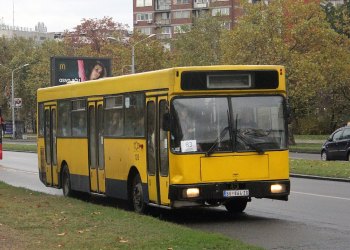
Suburban program was by no means neglected, thus buses for Germany and some other west European countries were delivered from Novi Sad. The army of Syria bought a substantial number of suburban buses. Also, Autokaroserija exported dozens of city buses for Damascus Public Transport. These buses were all built on FAP chassis. Autokaroserija undertook another interesting business enterprise; Buses for Muslim Pilgrims sold to Saudi Arabia. These vehicles were air-conditioned, had separate reservoirs for fuel and water and were able to drive for a 1000 km without stopping. Their roof was convertible as the pilgrims didn’t want any physical barrier between them and Allah including bus roofs.
| Variation of TAM 260 A 116 P for Germany |
 |
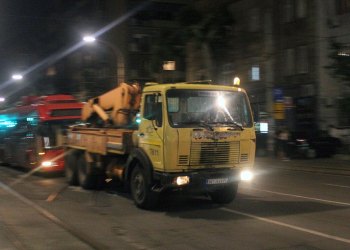
1990s brought disintegration to SFRY and troubles to Autokaroserija. This meant breaking off with TAM, the loss of market positions and undeserved, unjustified UN Security Council’s sanctions. Many workers fled the factory seeking better paid jobs and security. The second half of the decade marked a certain prosperity of Autokaroserija. The name was changed to Neobus, Novi Sad Bus Factory. Several new types of buses were developed using only Neobus’ employees’ skills, expertise and knowledge. Hand in hand with the development of urban buses, construction team of Neobus worked on new intercity tourist vehicles. The prototypes were sold to "7. juli" Šabac and "Lasta", Belgrade. These models were preceded with intercity buses built on hungarian "Csepel" chassis, exported to Hungary and to Russian "Kaluga" medical institute.
| Intercity bus Csepel 875/21 by "Autokaroserija" |
 |
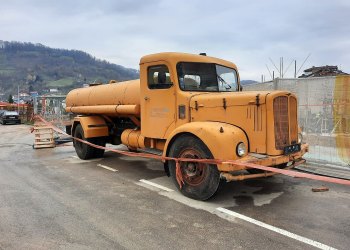
1996 was the year in which the first low floor articulated city bus was produced in Neobus. The prototype had been exhibited in Belgrade Commercial Vehicles Exhibition. Neobus would not settle for perfection in only urban and suburban buses production. The factory continued working on tourist and coach vehicles. This was done very carefully, therefore, the result was – success. Many prizes came to Neobus for its coaches and tourist buses. Our Coach was the bus of 2001 in Yugoslavia. Appreciating the quality of bodybuilding at Neobus, famous companies such as Mercedes-Benz and English Dennis issued special permits allowing their trade marks to be placed on the buses made by Neobus. Even in that period, Neobus had Volvo’s certificate according to which it produced buses on Volvo chassis.
| Low floor city bus prototype with Raba components | Neobus coach prototype |
 |
 |
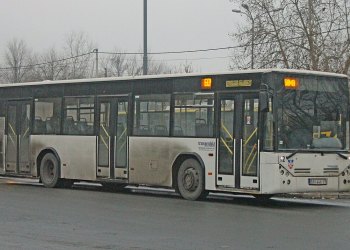
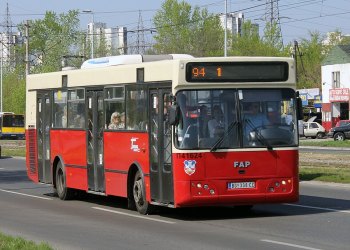
| Articulated city bus Volvo B10MA | City bus on Volvo B10B chassis |
 |
 |
Neobus is an example of successful privatization by healthy foreign capital. In October 2004 a Saudi businessman Mr. Alaa Maghrabi Mohamedali A bought the factory at the auction which marked the beginning of a new era for Neobus.
The following changes were made among others:
- The management was refreshed
- New, highly educated and highly qualified personnel was employed
- The new technologies were introduced
- The strategic alliance with "Volvo" has been established
- The certificates of homologation and ISO 9001 standards satisfaction were acquired
- The new, modern and superior production program was developed
- The number of workers and quality of products is in constant increase
Sources: Saša Conić, Autobusi.net, NEOBUS AD.